Cross-cutting (transmission, methodology, technique)
The articles that do not sit cleanly under one figure-cluster — Asuka and Hakuhō foundation work, technique pieces on yosegi-zukuri and dry-lacquer, scripture-tradition witnesses, *honji-suijaku* shrine-mandalas, and the meta-articles on how bodhi reads an image.
What “cross-cutting” means here
The bodhi corpus organises around iconographic clusters: Kannon, Pure Land, Kamakura sculpture, mikkyō, Daruma, Jizō. Some articles sit at the intersection of two or more clusters, or address the tradition rather than a specific figure within it. Those articles live here.
The cross-cutting cluster carries fifteen articles. They cover four distinct kinds of work:
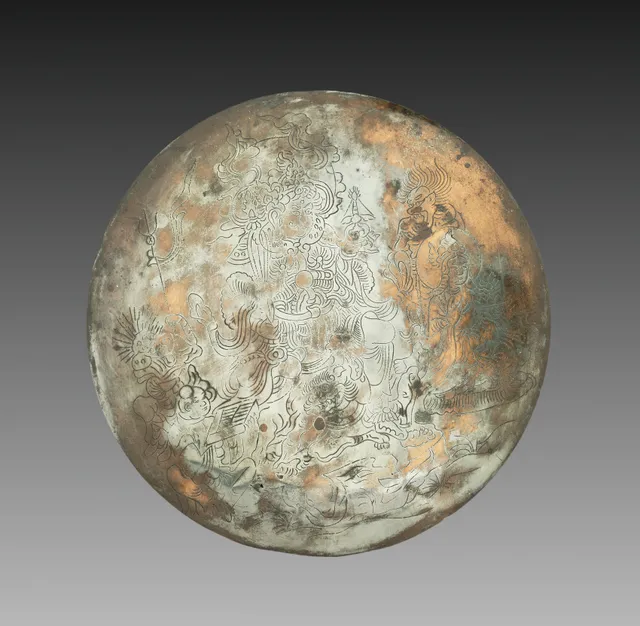
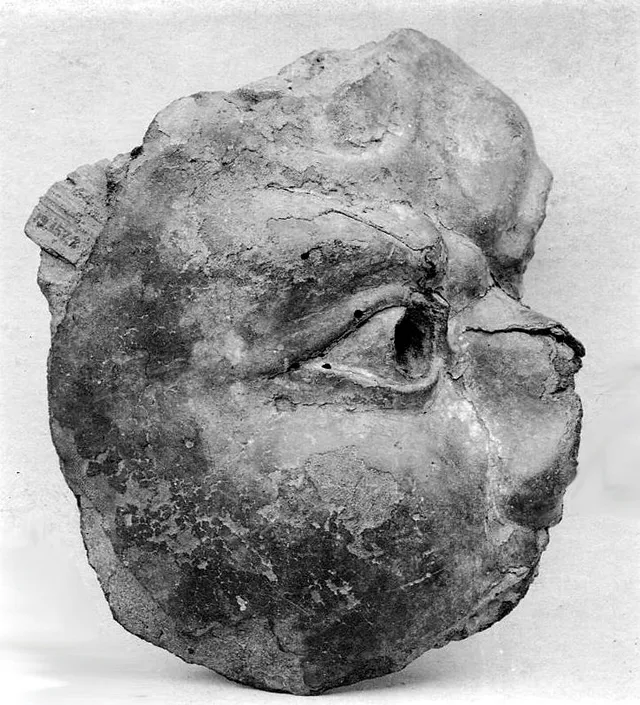
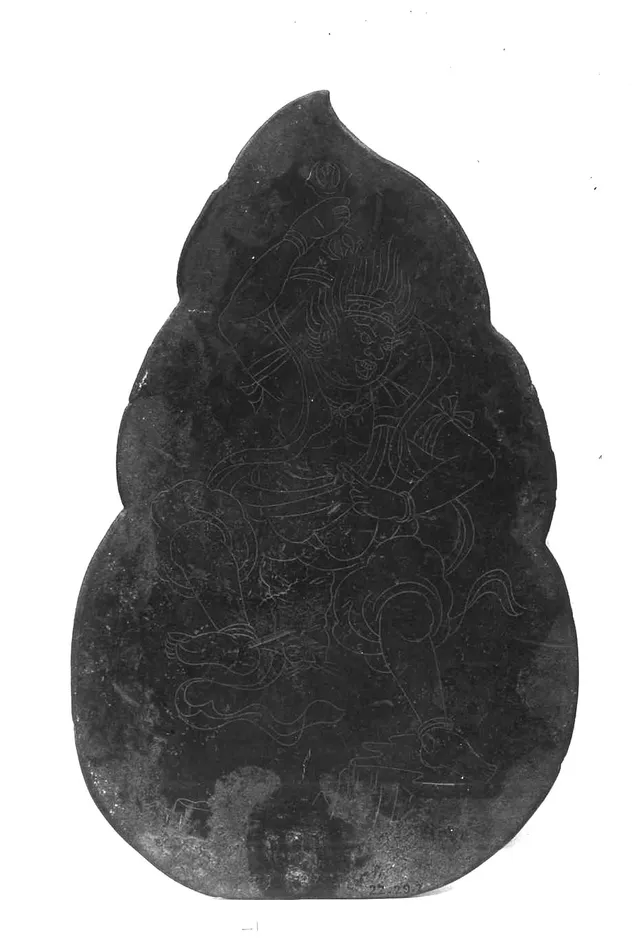
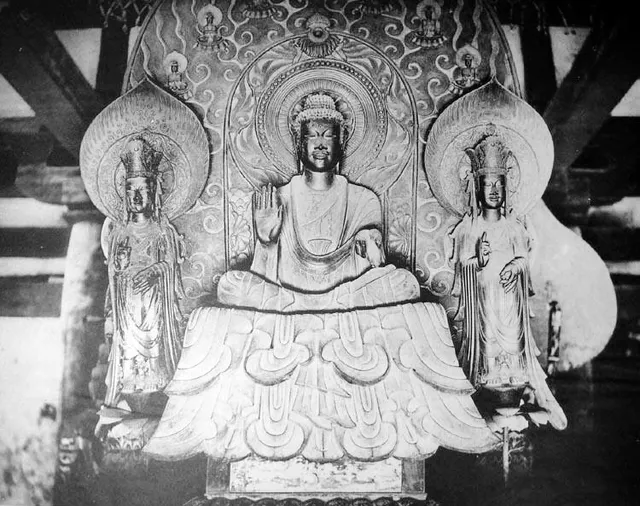
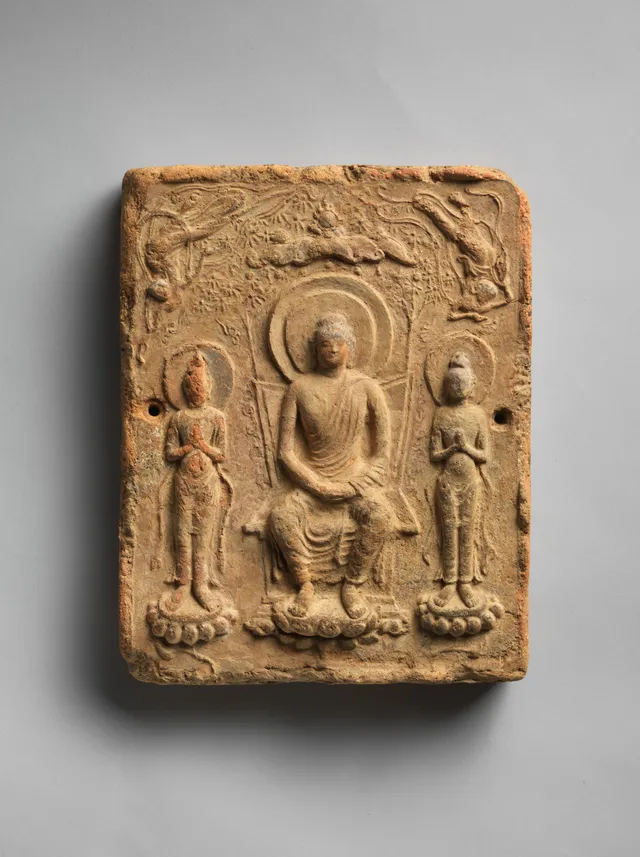
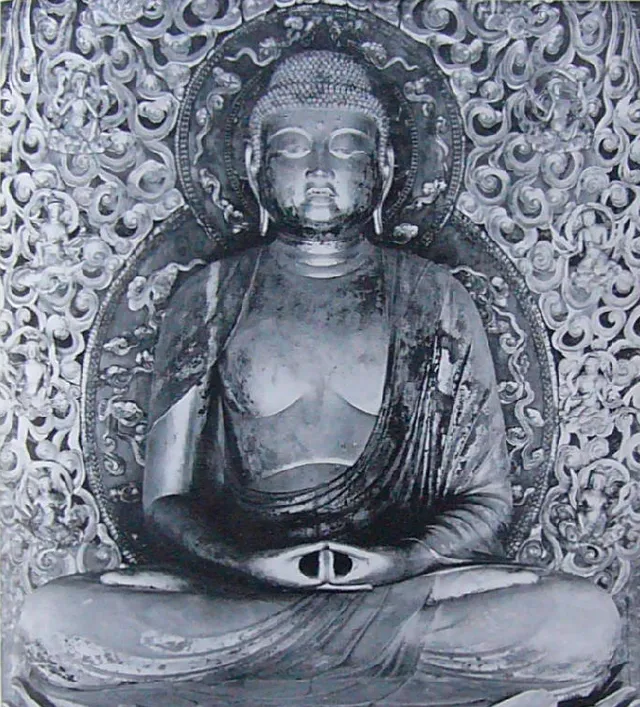
Foundation and transmission. The pre-Heian articles (the Hōryū-ji Kondō Shaka triad of 623 by Tori Busshi, the Asuka transmission of Tang precedent into Yamato, the Met 2015.300.249 Asuka Buddha triad tile) sit before the cluster typology stabilises. The seventh-century material is iconographically too early to fit the canonical figure-clusters that the later tradition produced.
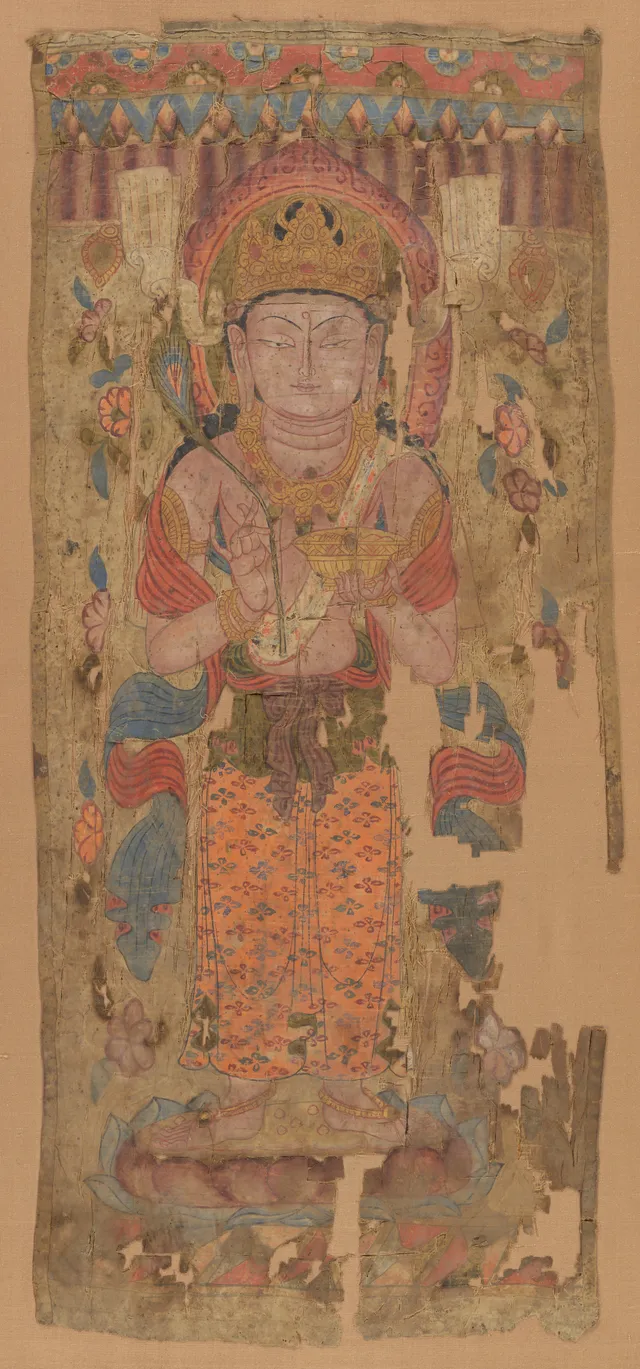
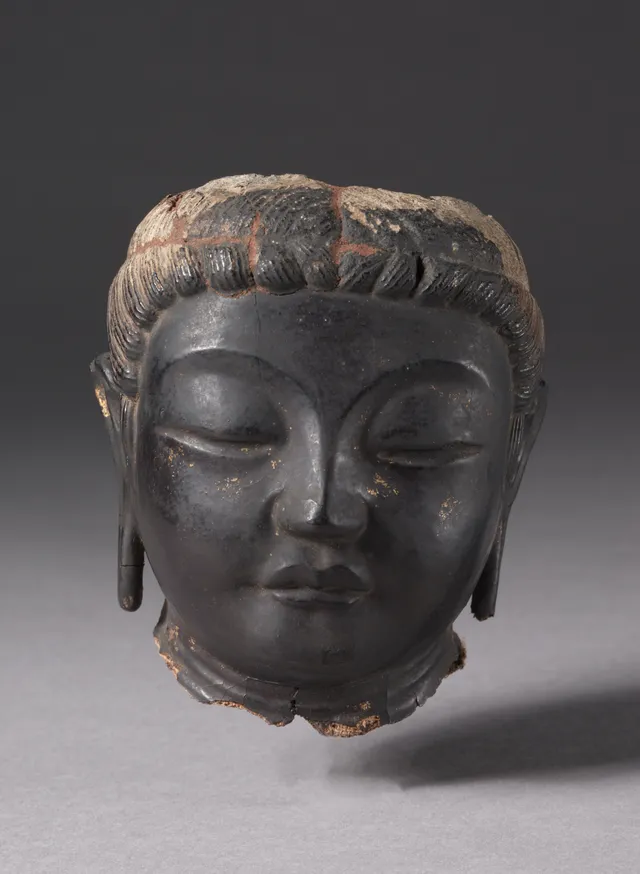
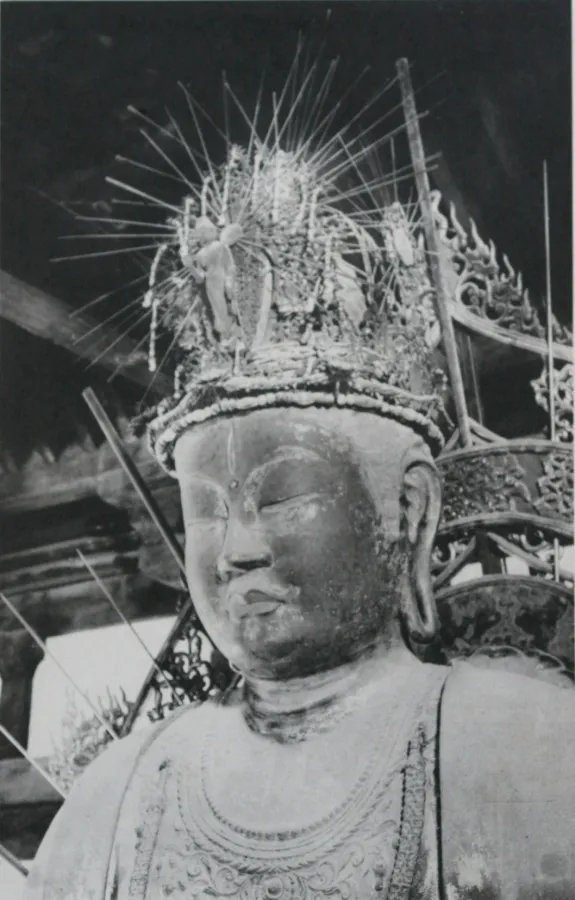
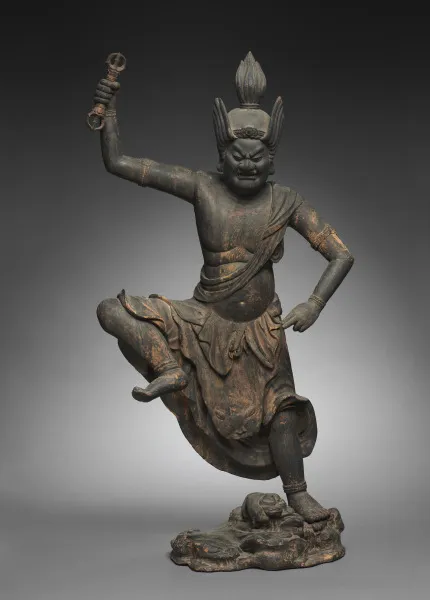
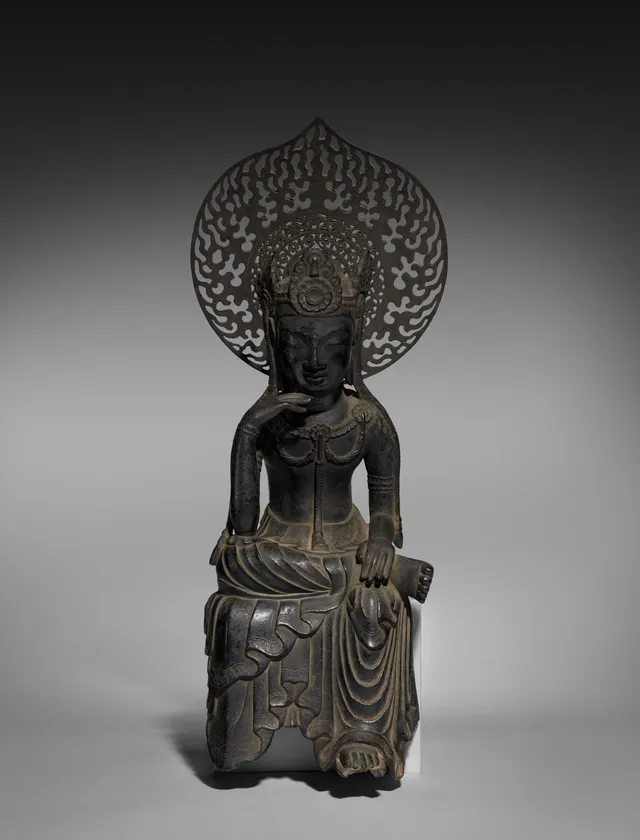
Technique pieces. The Yosegi-zukuri multi-block construction entry, the Kanshitsu dry-lacquer Tenpyō technique entry, and the Cleveland 1982.264 bodhisattva head in dry-lacquer read the workshop techniques that span clusters. The same yosegi-zukuri method underlies both the 1203 Nandaimon Niō at 8.4 metres and the Met 2015.300.250 Kaikei Jizō at 55.9 cm; the technique is the cluster-spanning vocabulary.
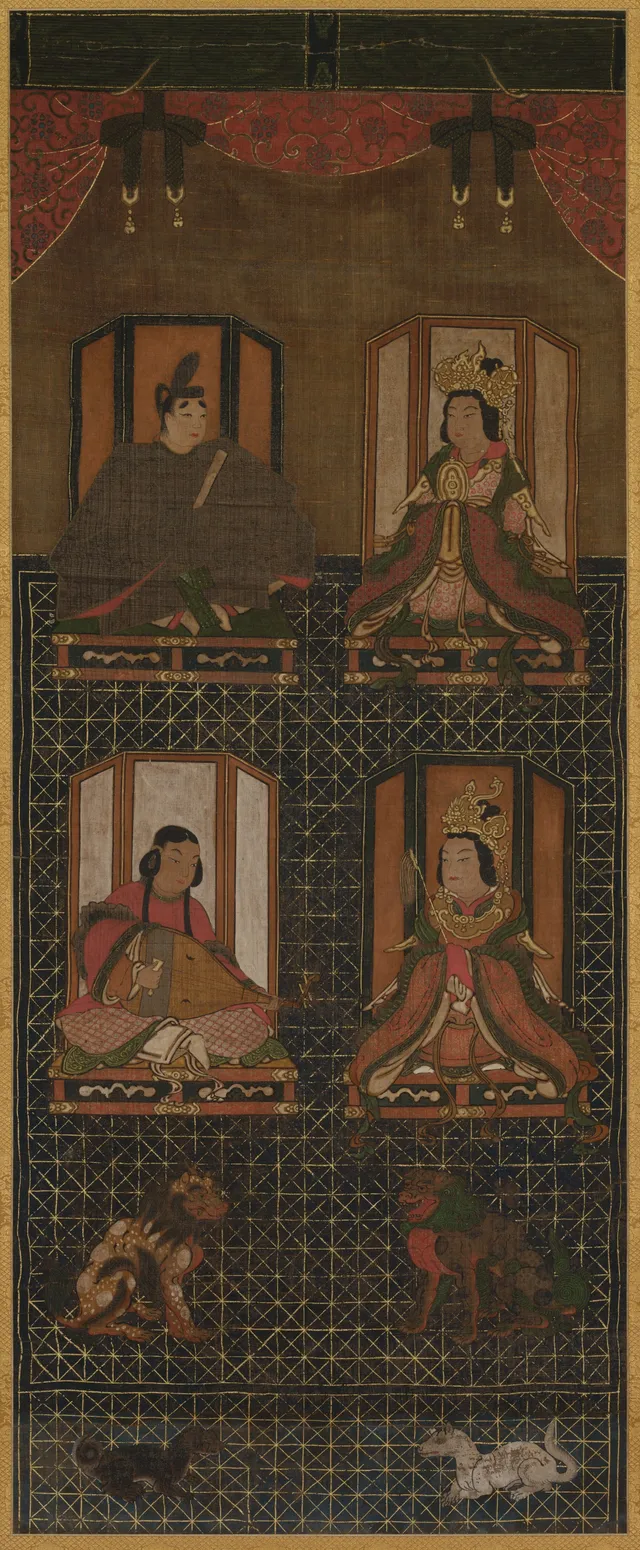
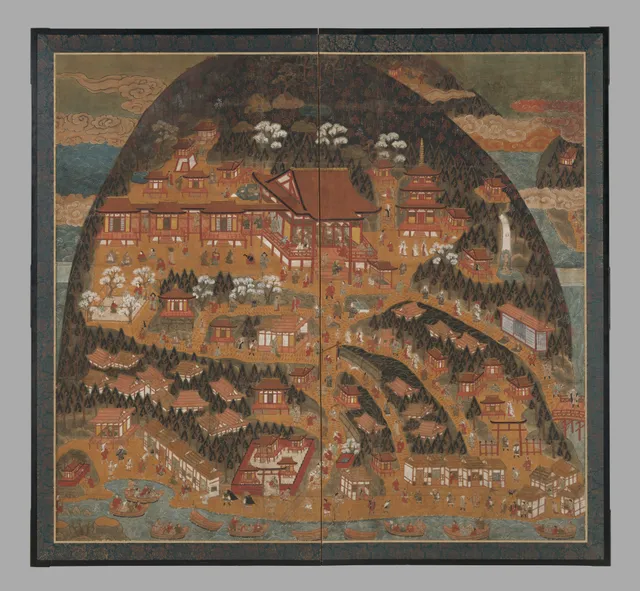
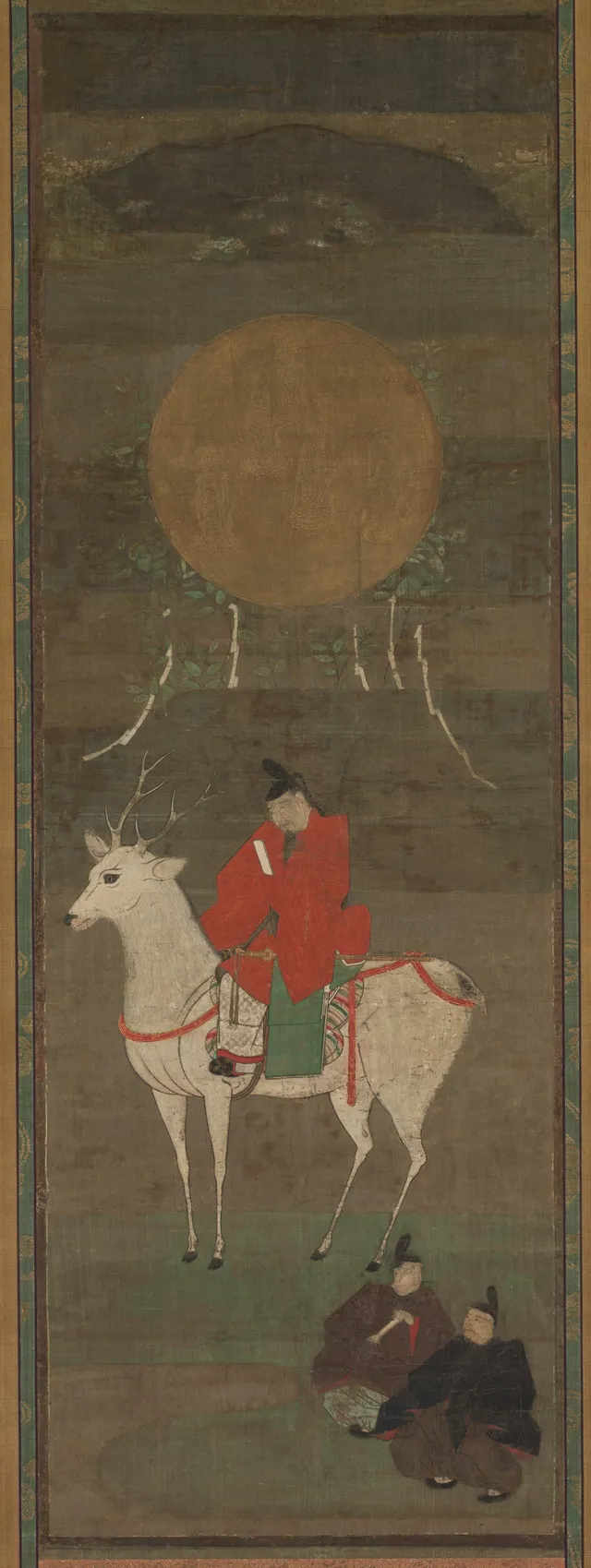
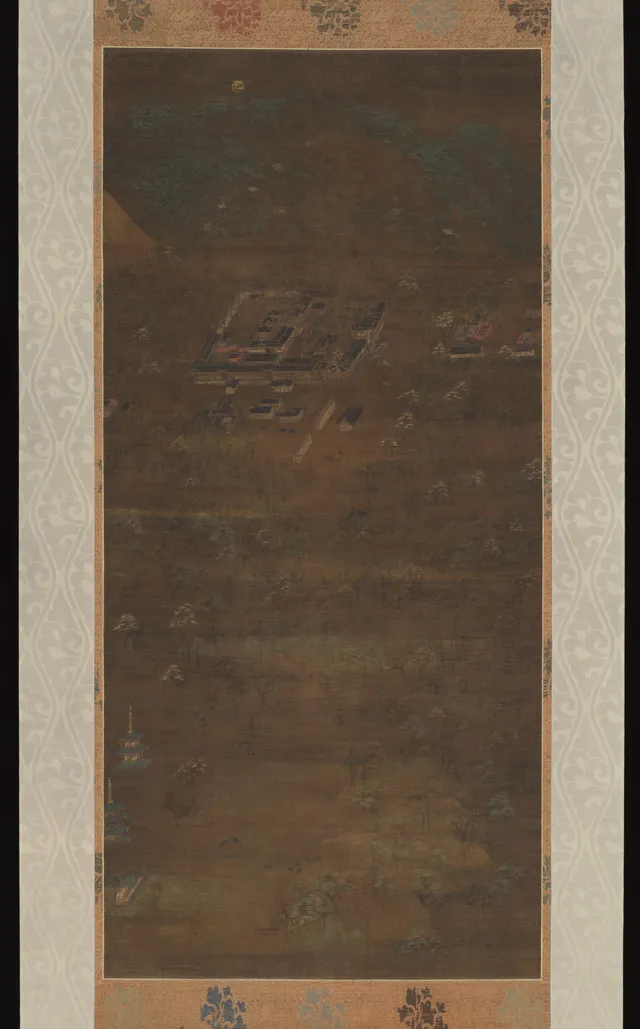
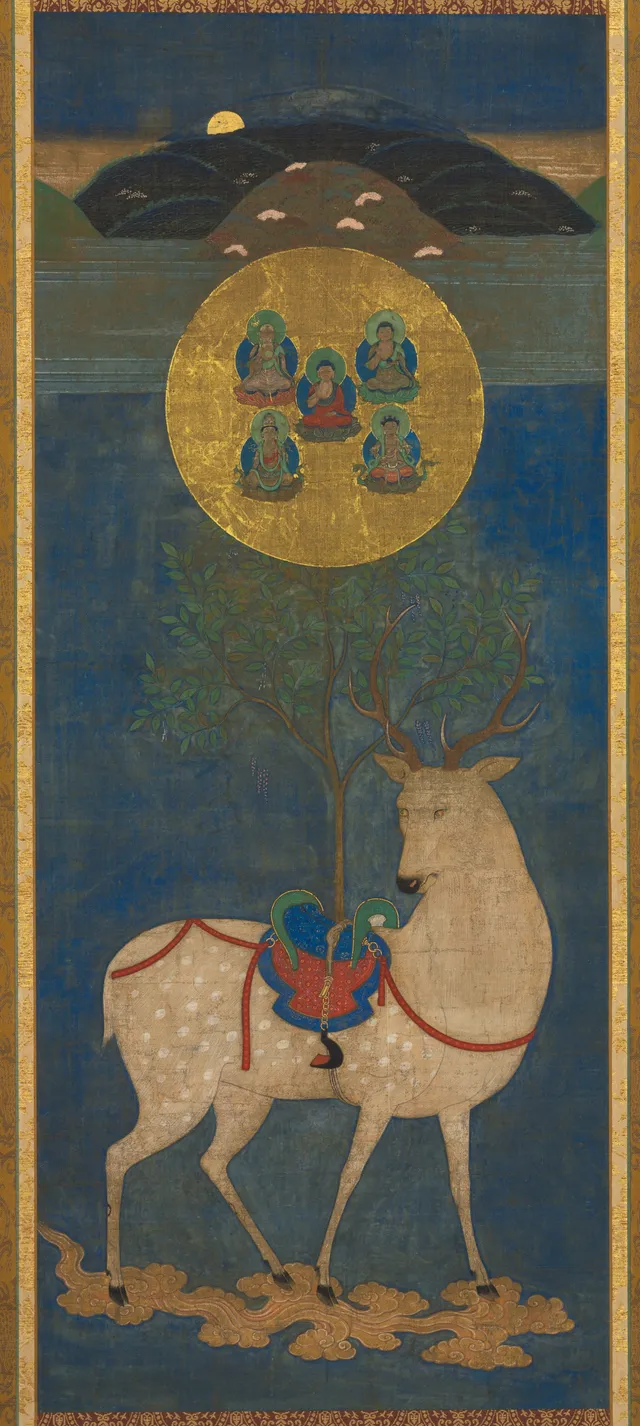
Scripture and honji-suijaku. The Cleveland 1916.1060 Abhidharmakośa fascicle, the Kasuga deer-mandala and Met Kasuga shrine mandala, the Met 2006.521 Kumano shrine mandala, the Zaō Gongen and Shugendō: the honji-suijaku tradition that pairs Buddhist deities with Japanese kami and produces shrine-mandala painting as a distinct iconographic programme. These articles cross the Buddhist / Shinto boundary as the medieval Japanese tradition itself did.
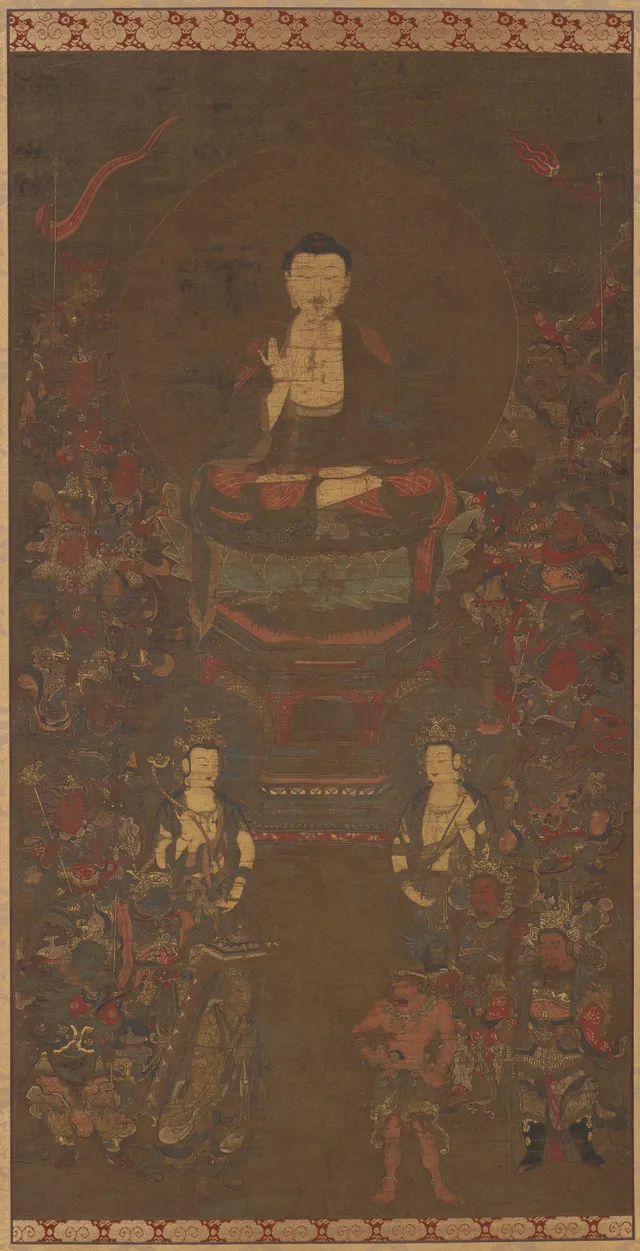
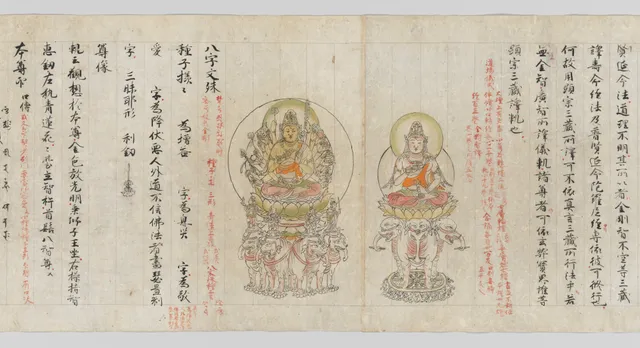
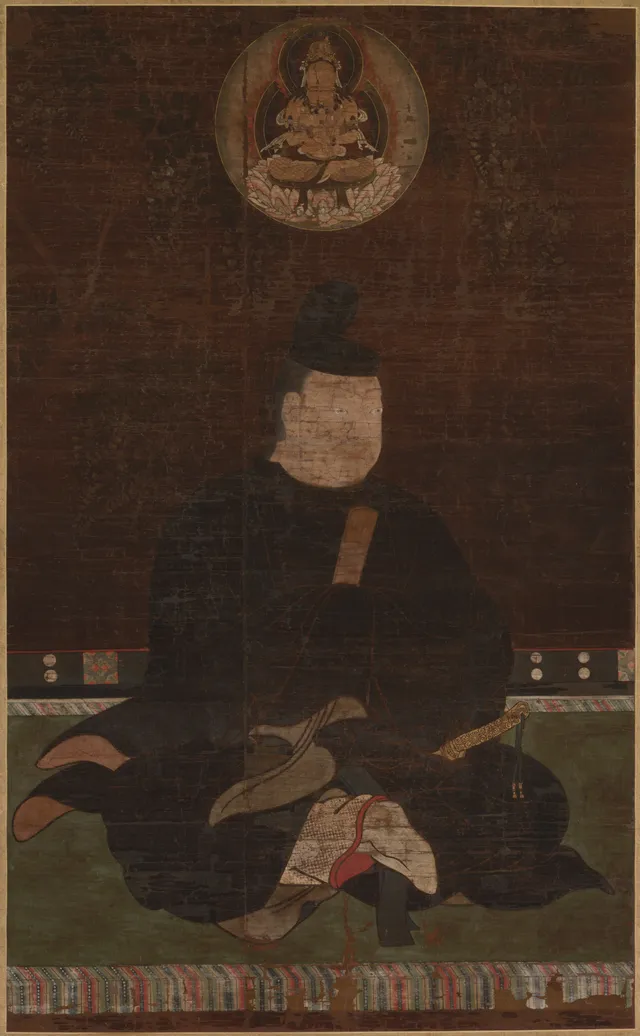
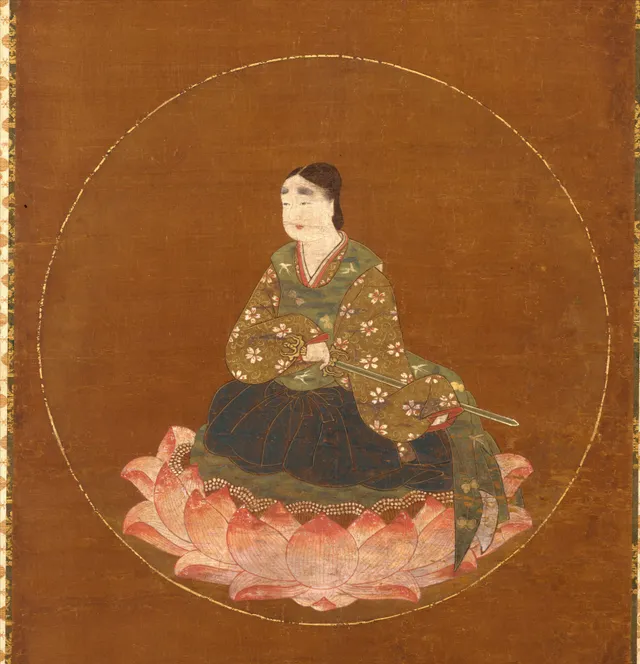
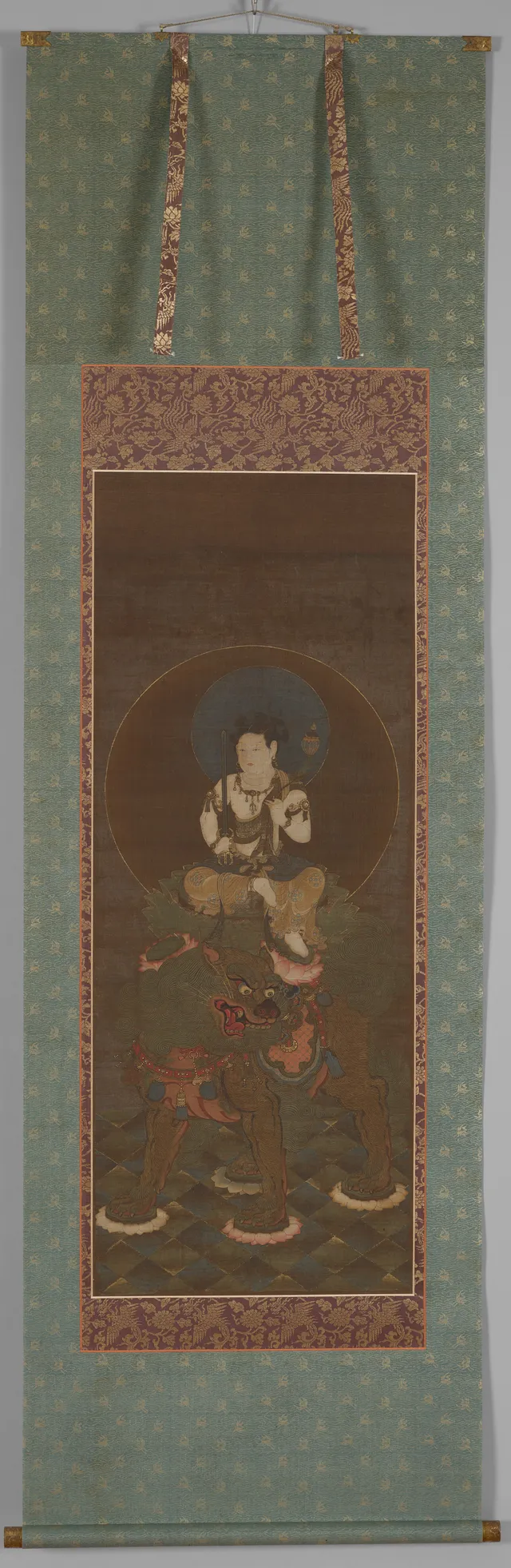
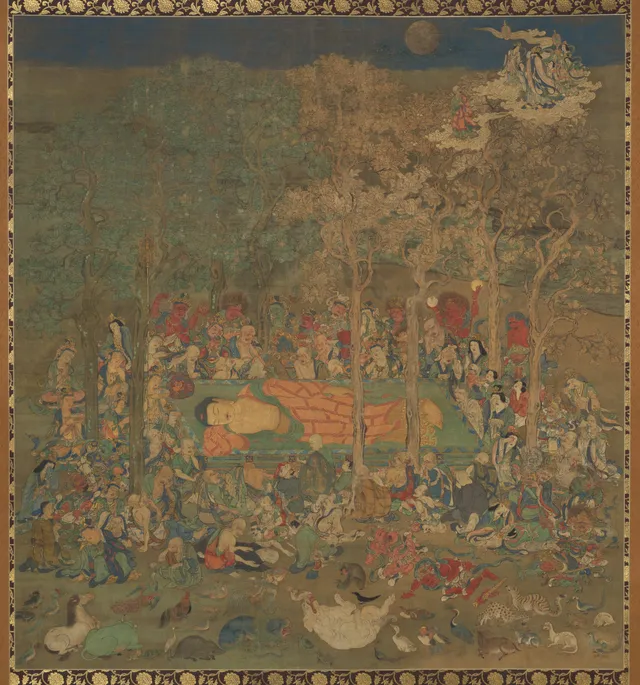
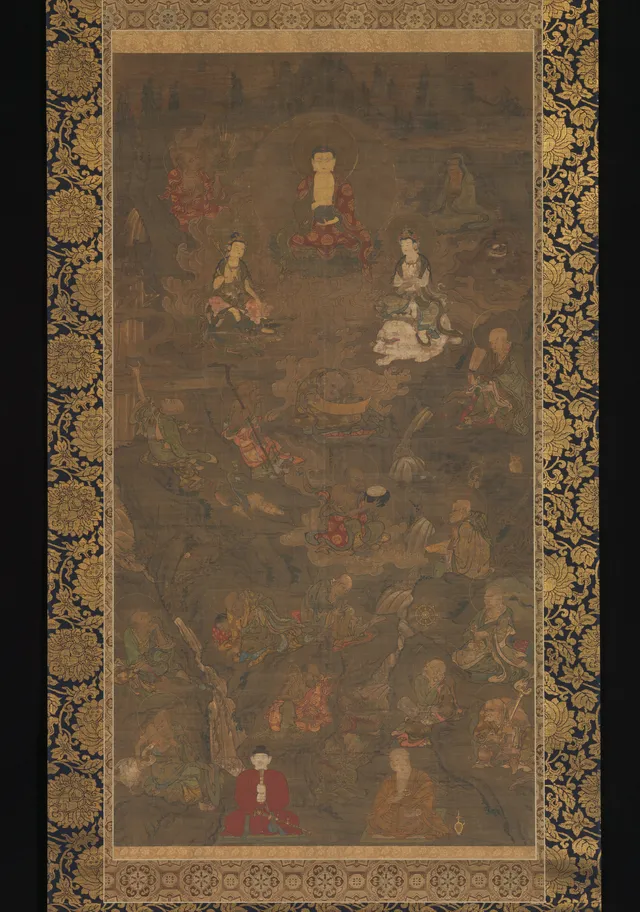
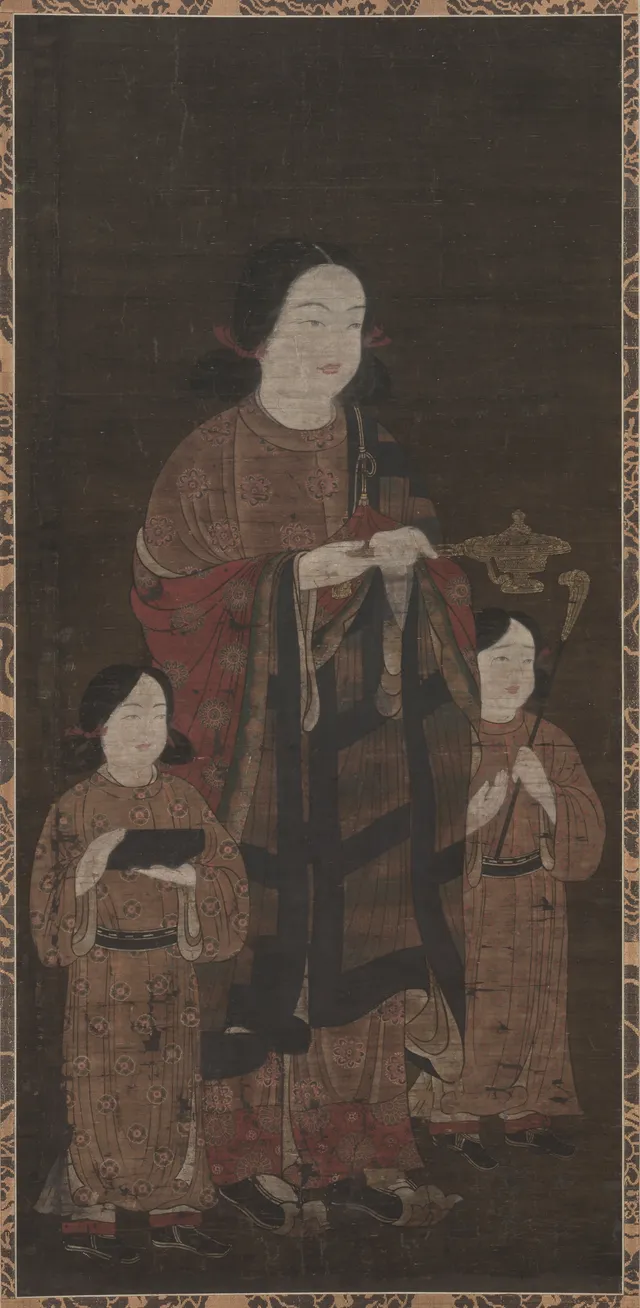
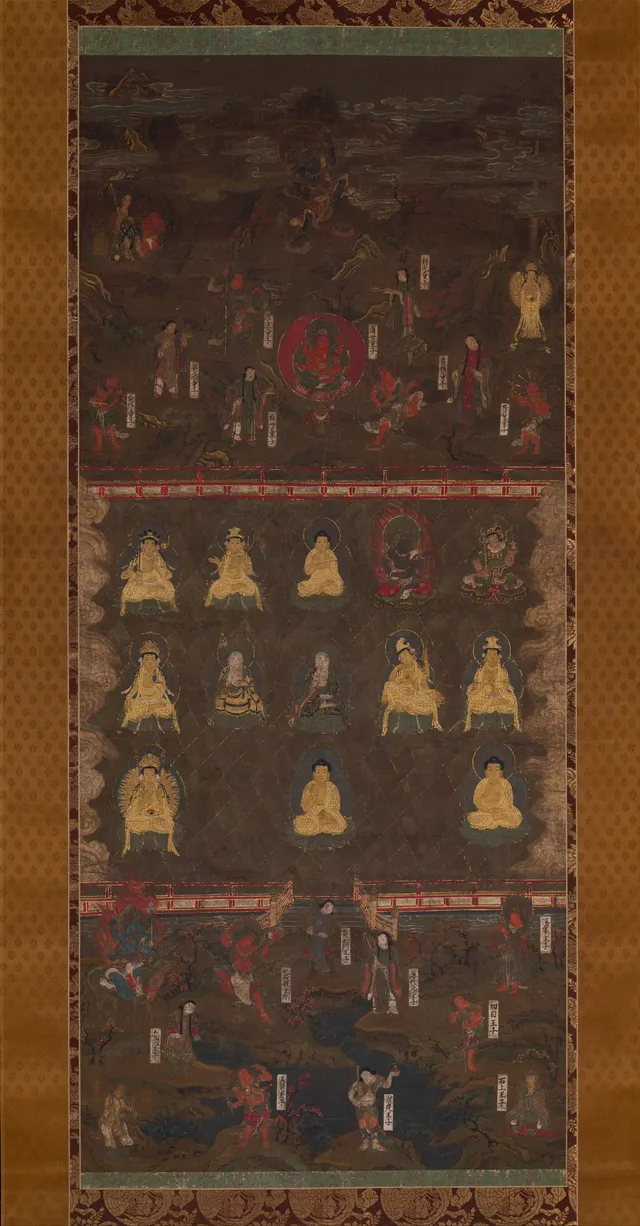
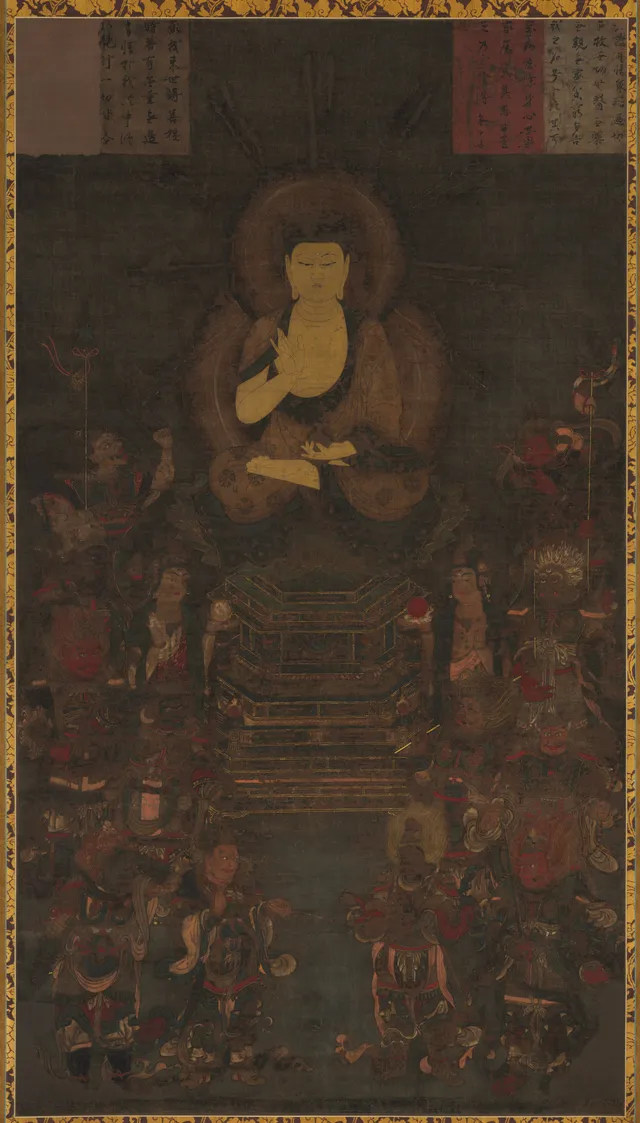
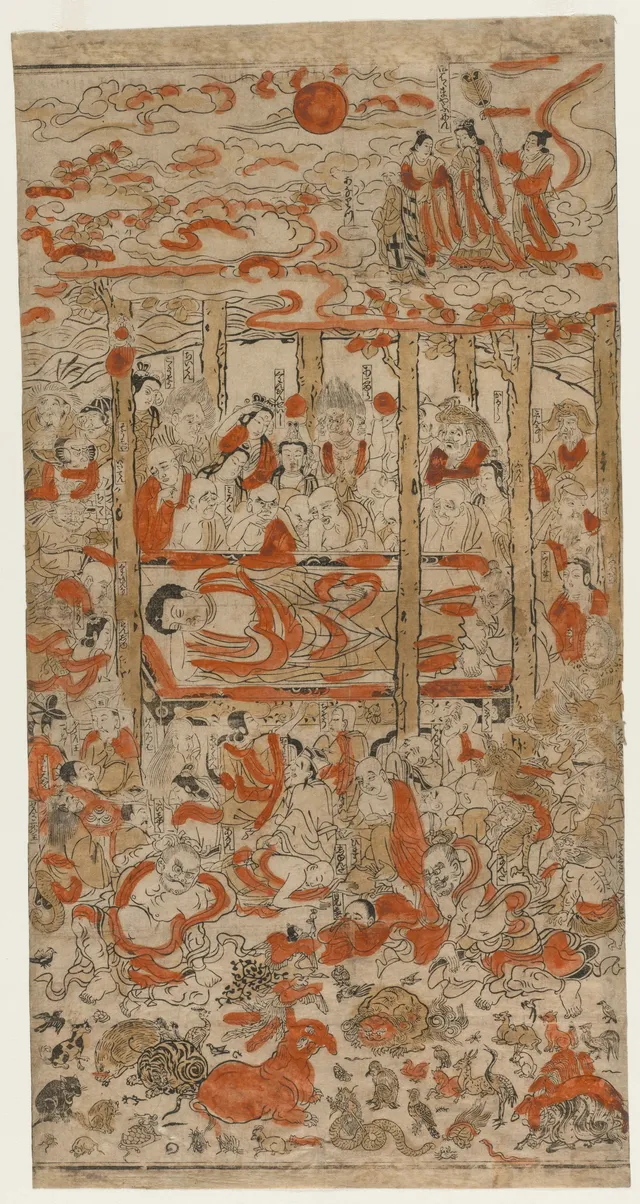
Figure-edges and method. The Shōtoku Taishi at age sixteen, the Miroku future Buddha, the Parinirvāṇa Edo tan-e, the Cleveland 1938.422 Yakushi twelve generals: figures and programmes that sit at the iconographic edge of the canonical clusters or extend them into less-covered registers.
What to read first
Three entry points:
The reader looking for the seventh-century starting position should start with the Hōryū-ji Kondō Shaka triad of 623 by Tori Busshi. It is the first firmly-dated work in the Japanese Buddhist sculptural record and the canonical Tori-school witness; everything later in any cluster sits in some relation to it.
The reader looking for the technique vocabulary should start with the Yosegi-zukuri multi-block construction entry. The joined-block technique is the single most important production method in the Japanese Buddhist sculptural record from the late tenth century through the Edo period; understanding it unlocks the workshop-economy reading of the Kamakura sculpture cluster.
The reader looking for the honji-suijaku tradition should start with the Kasuga deer-mandala. The Kasuga shrine programme is the most-cleanly-documented Japanese instance of Buddhist and Shinto iconographies producing a single composite visual tradition; the deer-mandala is the most-reproduced single Kasuga witness.
The honji-suijaku question
Several articles in this cluster sit on the Buddhist / Shinto boundary. Medieval Japanese practice did not, in most contexts, treat Buddhism and the kami tradition as separate religions. The doctrine of honji-suijaku (本地垂迹), “the original ground and its manifest traces,” held that the Japanese kami were local manifestations (suijaku) of the universal Buddhist deities (honji); Amaterasu was Dainichi’s local form, Hachiman was Amida’s, the Kasuga deer-god was Shaka’s. The honji-suijaku visual programme produced an extensive shrine-mandala tradition: painted compositions that map the sacred geography of a specific Shinto shrine while showing the Buddhist correspondences of the kami venerated there.
The cluster carries this material as cross-cutting because the honji-suijaku programme is constitutionally cross-tradition. The Kasuga deer-mandala, the Met Kasuga shrine mandala from the Ōba-Burke collection, the Met 2006.521 Kumano shrine mandala, and the Zaō Gongen / Shugendō article read different shrine-programme witnesses. The post-1868 Meiji shinbutsu bunri (forced separation of Buddhism and Shinto) imposed a tradition-boundary that did not exist in the medieval material; the cluster reads the pre-1868 record as the kami-Buddha-unified record that actually produced the objects.
The technique thread
Three technique pieces sit in this cluster: yosegi-zukuri (multi-block joined-block wooden sculpture), kanshitsu (dry-lacquer sculpture), and an exemplar dry-lacquer head. Together they cover the two principal Japanese Buddhist sculptural techniques from the seventh through the thirteenth century.
The painting side has its own pieces: the silk and paper grounds a painter worked on, gold and silver on indigo paper for Heian sutras, kirikane cut-gold surface work, and the Edo tan-e hand-coloured print.
The technique-rather-than-figure reading matters because the production-technique constrains the iconographic register. Dry-lacquer sculpture (Tenpyō period, c.710–794) produces a different sculptural type (typically smaller-scale, more refined-surface, more idealised-face) than later yosegi-zukuri (Heian-late through Kamakura). The technique change runs alongside the patronage change (court-commissioned Tenpyō witnesses largely supplanted by temple-workshop and elite-patron Heian-late witnesses) and the iconographic change (the Tenpyō Asuka-Tang-derived idealised type yielding to the increasingly individuated Kei-school portrait register). Reading these three pieces together gives the cluster-spanning workshop-history context that no single figure-cluster article alone supplies.
What the cluster does not cover
Two things sit at the edge of the cross-cutting cluster and are not here:
- Modern scholarly historiography. The cluster does not yet carry dedicated articles on the major modern Japanese Buddhist art historians (Mōri Hisashi, Nedachi Kensuke, Rosenfield, Mizuno Seiichi, Yoshizawa Chū). The articles cite these scholars at the page level where relevant; the historiography itself is not the subject of any article here.
- Conservation history and museum institutional history. The Meiji-era haibutsu kishaku (anti-Buddhist disestablishment) and its long aftermath, the 1906 Kōfuku-ji deaccessions, the early-twentieth-century museum-acquisition wave (Boston MFA, Cleveland, the Met), the post-1945 Bunka-chō (Agency for Cultural Affairs) cultural-property designation programme, is referenced across many articles but is not treated on its own. Readers who need it should start from the museum records cited in each article.
What stays open
The cluster’s organising weakness is also its strength: it gathers articles that do not fit elsewhere, which makes it both the most-diverse cluster in the corpus and the most-difficult to maintain as a coherent reading project. Three open questions worth tracking:
The Asuka-Hakuhō coverage (currently the Hōryū-ji Kondō Shaka triad, the Asuka transmission article, and the Met 2015.300.249 Asuka tile) does not yet include a dedicated Asuka-dera Daibutsu (606) article, which would be the most-significant remaining seventh-century single-work study.
The honji-suijaku coverage is currently anchored by the Kasuga and Kumano material. The Hachiman shrine-programme (the third of the three principal medieval honji-suijaku sites) has no dedicated article here, so the triangle is read from two of its three corners.
The methodological thread (articles on how bodhi reads an image, on the workshop economy as a reading lens, on the patient-observer voice) is currently carried inside individual articles rather than in standalone articles. The nearest thing to a standalone method piece is How to date a Japanese Buddhist painting, which sets out the evidence lines the painting articles rely on.
In this cluster
44 articles



No articles match that filter.