Figures
Buddhas, bodhisattvas, wisdom kings, and historical patriarchs that recur across the canon. Each page collects iconographic markers, tradition, period, and canonical attributes.
-
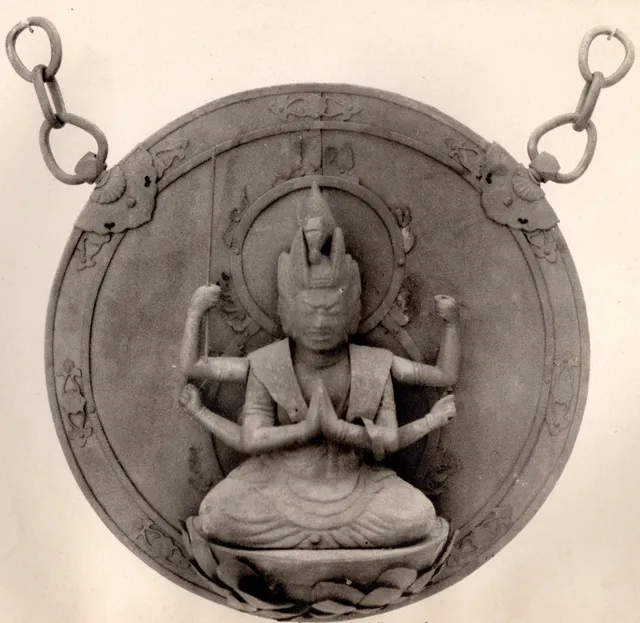 figure Japanese Buddhism
Bato Kannon
Heian through Edo; canonical Heian–Kamakura
Bato Kannon (馬頭観音) is the horse-headed wrathful form of Kannon, three-faced, six- or eight-armed. The diagnostic is the horse head atop the hair; the batō-in mudra (fingers crossed at the chest) and the kenjaku lasso are the secondary anchors. Within the Six Kannon programme, Bato is assigned to the realm of animals. The wrathful expression and three-faced reading separate Bato from the placid Kannon family — this is the only canonically wrathful Kannon form.
-
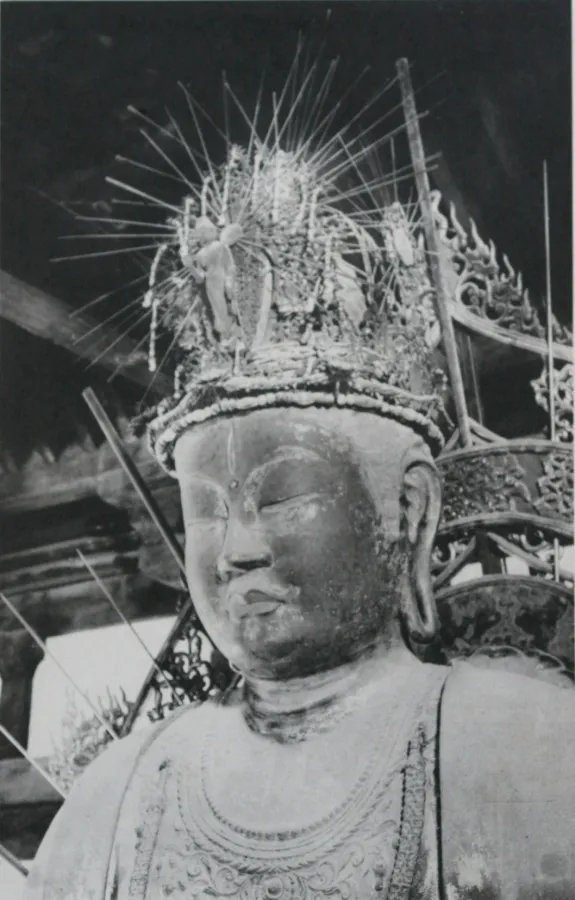 figure Japanese Buddhism
Fukūkenjaku Kannon
Nara through Kamakura; canonical Tenpyō (mid-8th c.) and Heian–Kamakura
Fukūkenjaku Kannon (不空羂索観音) is the eight-armed standing form whose name names its diagnostic: the amogha-pāśa — the never-empty lasso. Three eyes, eight arms, the lasso held in one hand, a silver Amida figure mounted in the jewelled crown. The Tōdai-ji Hokke-dō image, c. 747, is the canonical Tenpyō dry-lacquer anchor. Within the Tendai Six Kannon programme, Fukūkenjaku substitutes for Juntei in the realm-of-humans slot (per Fowler 2016).
-
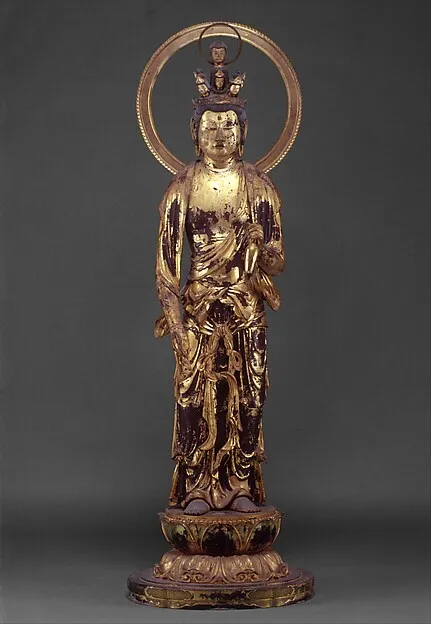 figure Japanese Buddhism
Jūichimen Kannon
Nara through Edo; canonical Heian–Kamakura
Jūichimen Kannon (十一面観音) is the eleven-headed Esoteric form of Kannon. The canonical stack reads as three benevolent faces forward, three wrathful at the sides, three smiling at the rear, one Buddha-form crown, and one rear-facing laughing head. Within the Six Kannon programme, Jūichimen is assigned to the realm of asuras. The body is canonically two-armed, distinguishing the form from Senju at the arm count even when both share the eleven-headed stack.
-
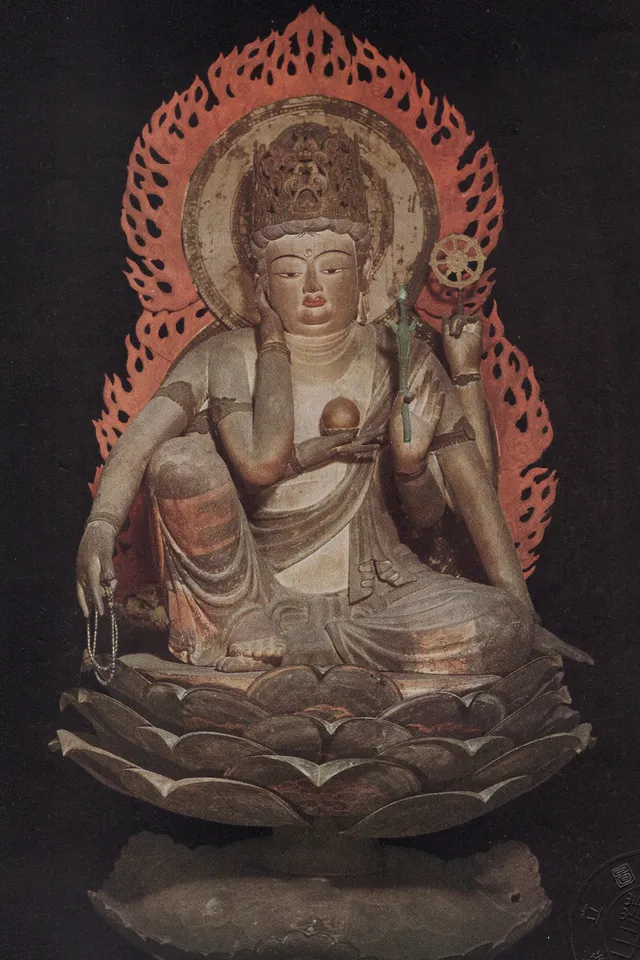 figure Japanese Buddhism
Nyoirin Kannon
Heian through Edo; canonical Heian–Kamakura
Nyoirin Kannon (如意輪観音) is the seated, six-armed Esoteric form of Kannon. The diagnostic is the rinnō-za posture (one knee raised) and the right-hand-to-cheek meditative gesture; the cintāmaṇi (wish-granting jewel) and the dharma wheel are the canonical attributes. Within the Six Kannon programme, Nyoirin is assigned to the realm of humans in the Shingon reading. An abbreviated two-armed seated form is documented in Edo lay-devotional contexts.
-
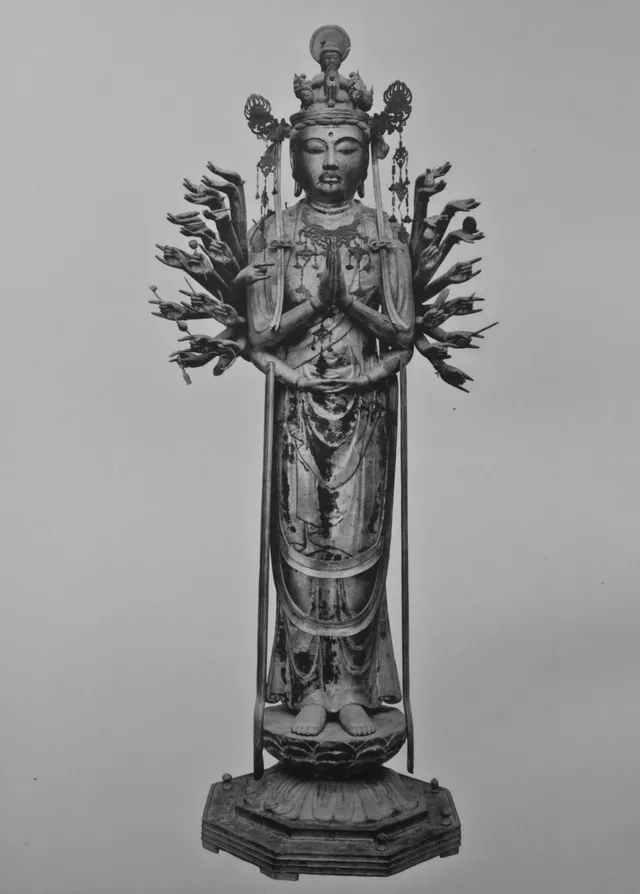 figure Japanese Buddhism
Senju Kannon
Nara through Edo; canonical Heian–Kamakura
Senju Kannon (千手観音) is the thousand-armed Esoteric form of Kannon. The canonical Japanese reading uses forty-two arms as sculptural shorthand for one thousand: two central in gasshō, forty outer arms each holding a different ritual implement. The eleven-headed stack is the canonical sub-iconography. Within the Six Kannon programme, Senju is assigned to the realm of hell-beings. The Sanjūsangen-dō chief image (Tankei, 1254) is the canonical anchor.
-
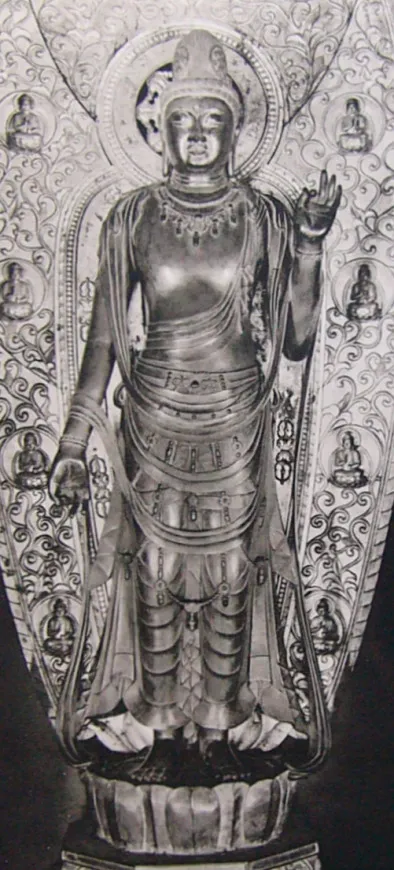 figure Japanese Buddhism
Shō Kannon
Asuka through Edo; canonical from Heian
Shō Kannon (聖観音) is the canonical base form of Kannon: single-headed, two-armed, standing or seated, holding a lotus stem and a water-vase. Within the Heian Esoteric Six Kannon programme (Ningai's Shingon canonical, per Fowler 2016), Shō is assigned to the realm of naraka (hells); outside the programme it is the most widely depicted Kannon form in Japanese sculpture from the Asuka period forward. The realm-assignment was never strictly adhered to across the tradition.