Mikkyō (Esoteric Buddhism)
Shingon and Tendai esoteric Buddhism produces an iconographic vocabulary unlike any other in the Japanese tradition — wrathful guardian-deity programmes, mandala practice, and icon-as-ritual-specification. The cluster reads the visual record of that vocabulary across Heian and Kamakura output.
What mikkyō is, briefly
The Japanese esoteric tradition — mikkyō (密教), “secret teaching” — comprises principally the Shingon school (founded by Kūkai, 774–835, transmitted from Tang China) and the esoteric stream within the Tendai school (founded by Saichō, 767–822, drawing from the same continental tradition with a different ritual orientation). The two together provide Japan’s institutional and iconographic framework for what continental Buddhism calls tantra — the practice tradition that uses mantra, mudra, and visualised deity as the ritual means to enlightenment.
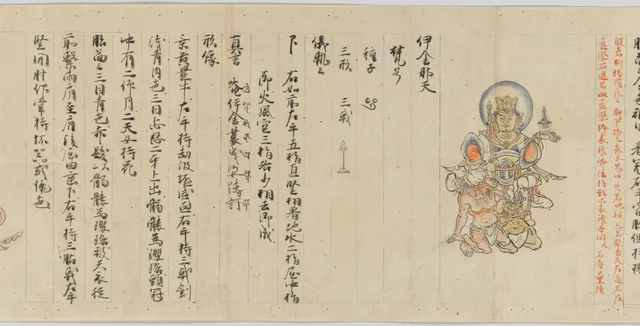
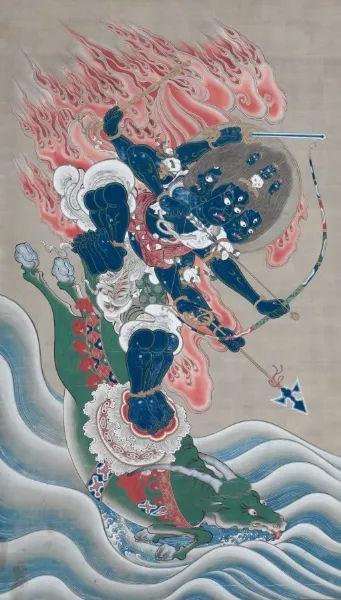
What this means for the visual record is that mikkyō icons are not, primarily, devotional images. They are ritual specifications. Each figure — Fudō Myō-ō, Aizen Myō-ō, the Five Wisdom Kings, the Two-Realm Mandala constellation — corresponds to a specific liturgical sequence prescribed in the ritual manuals (giki, 儀軌). The figure is the visual anchor for the practitioner’s structured activity in front of it; the practice and the icon are halves of a single unit.
This is the cluster’s organising thread. Eleven articles read across mikkyō witnesses from the Heian period through Kamakura production into Nanbokuchō continuation, with attention to the icon-as-specification reading. The disambiguation table below carries the Five Wisdom Kings grid; the figure-level iconographic-marker entry for Fudō Myō-ō is the canonical reading-anchor for the cluster’s central wrathful figure.
What the cluster covers
The eleven articles map across three iconographic programmes and one technical-pictorial tradition:
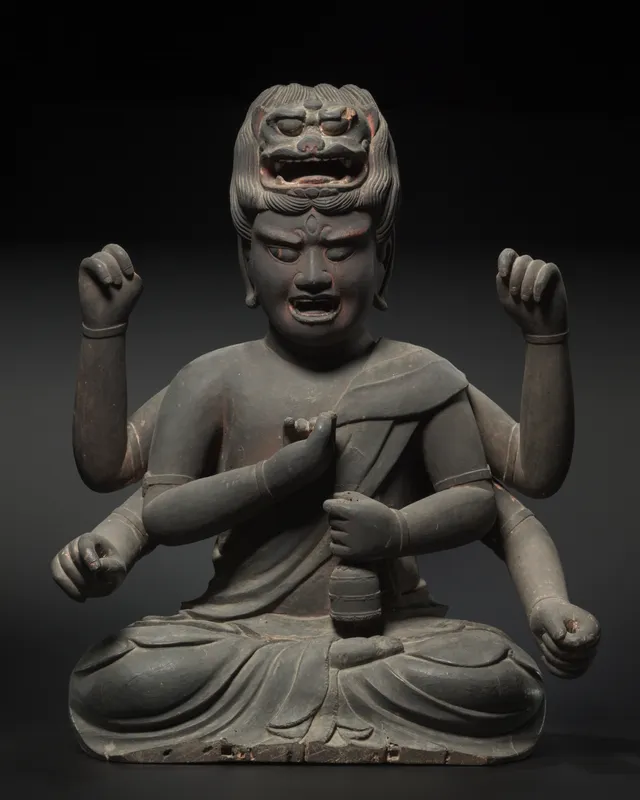
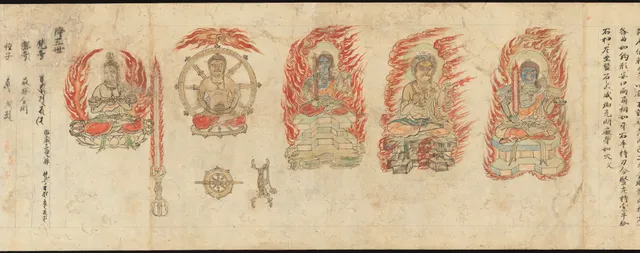
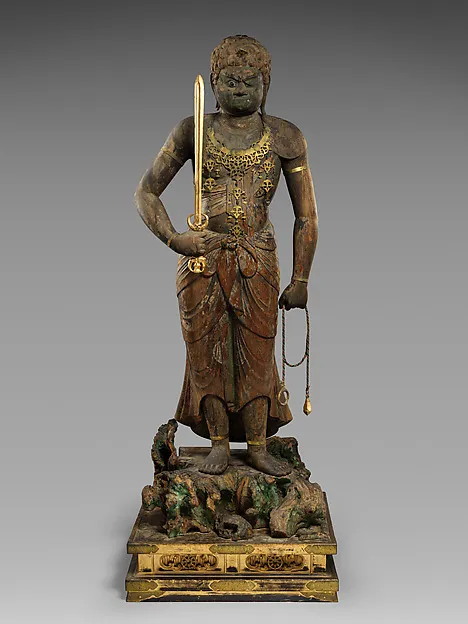
The Five Wisdom Kings (Godai Myō-ō). The five-figure programme — Fudō, Gōzanze, Gundari, Daiitoku, Kongō-yasha — is the most-widely-represented wrathful-deity grouping in Japanese mikkyō. The Met 1975.268.6 Godai Myō-ō handscroll is the cluster’s late-Heian / early-Kamakura witness; the Met 44842 Heian Fudō close reading treats the central figure in isolation; the Fudō Myō-ō iconographic markers entry carries the variant-level specification. The disambiguation table below carries the five-figure grid with attribute, mudra, and ritual-realm specification.
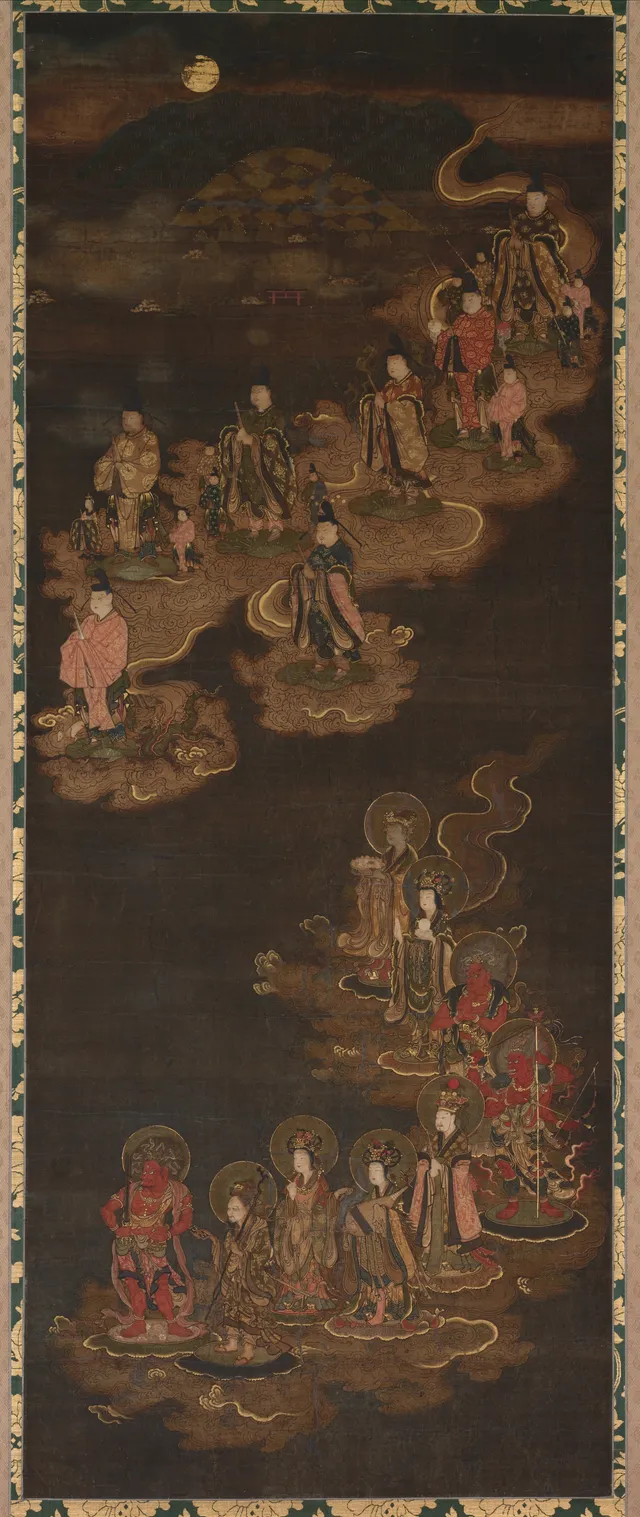
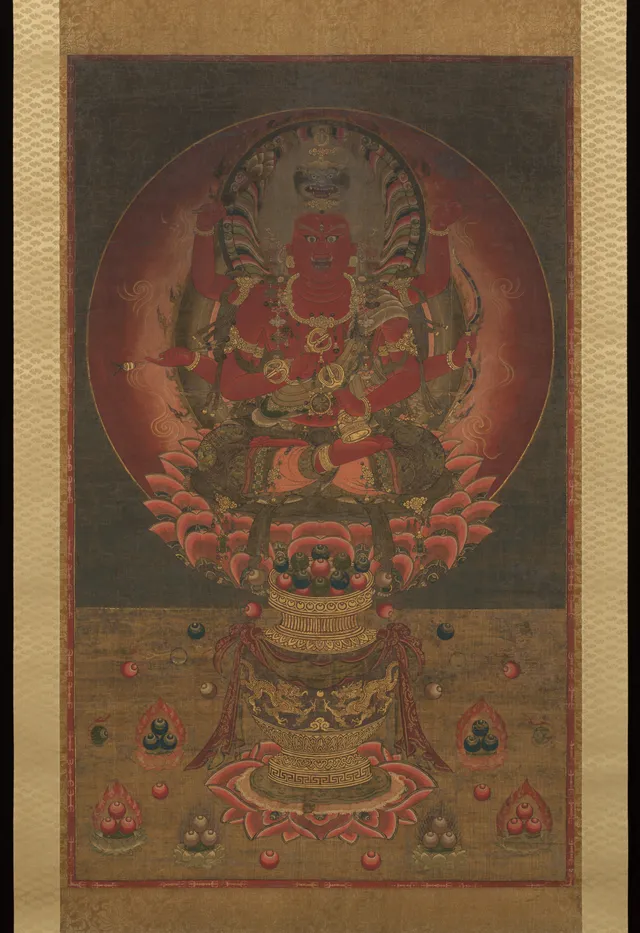
Aizen Myō-ō (Rāgarāja). The “Tinted King” — the deity who transmutes desire (Sanskrit rāga) into wisdom — has a substantial Japanese iconographic record from the Heian period onward. The Cleveland Aizen Myō-ō sculpture-painting pair reads a cross-media Aizen pairing; the Met 66.90 Nanbokuchō Aizen hanging scroll reads the painted tradition into the post-Kamakura period.
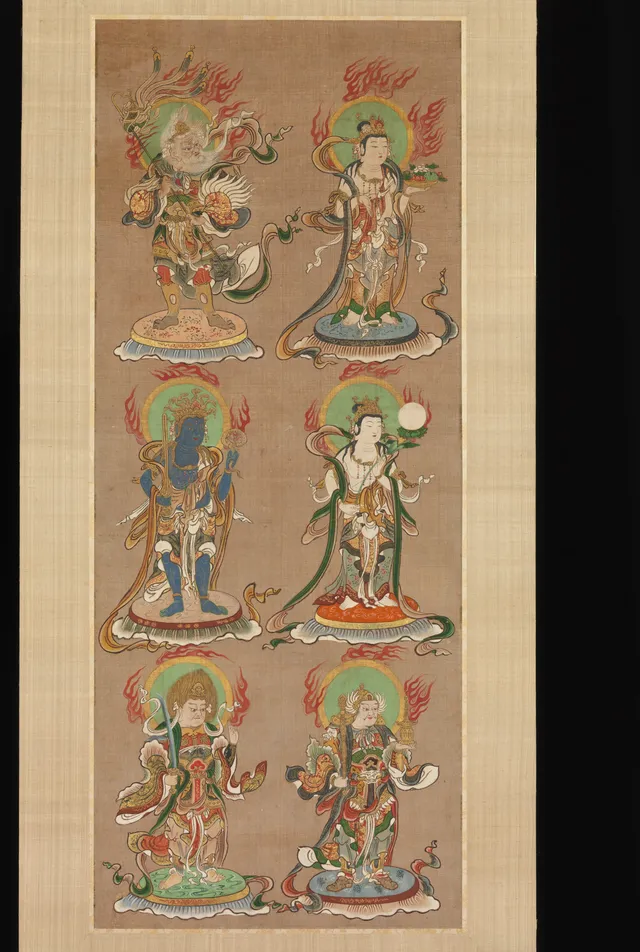
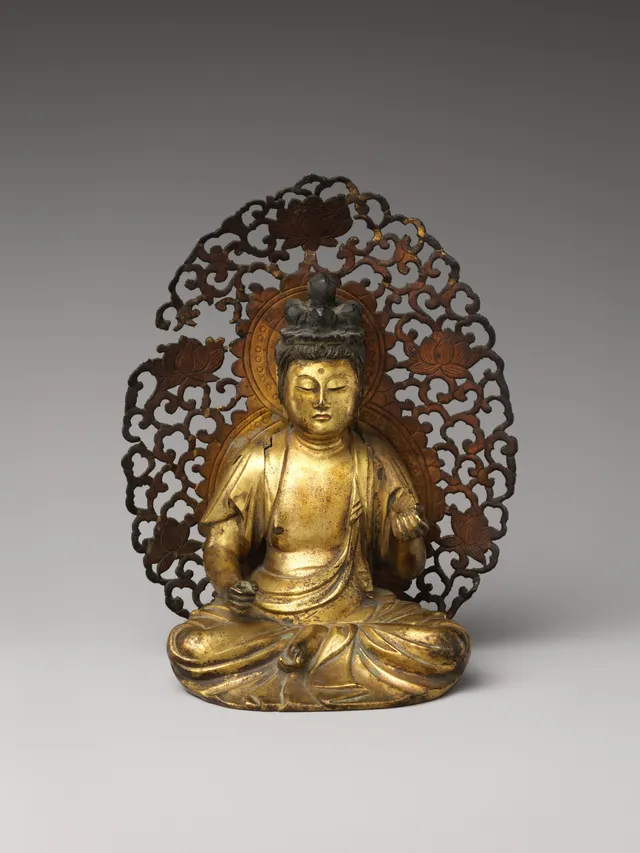
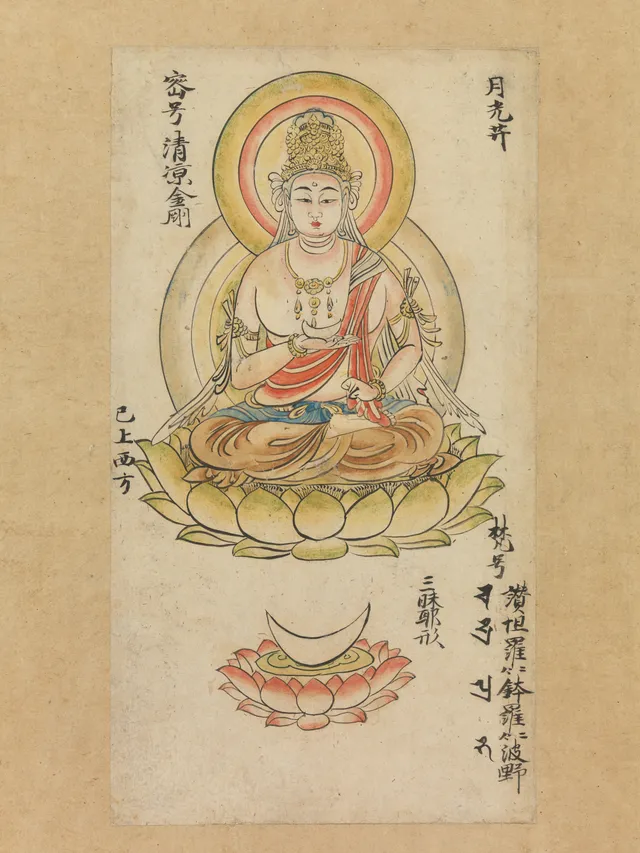
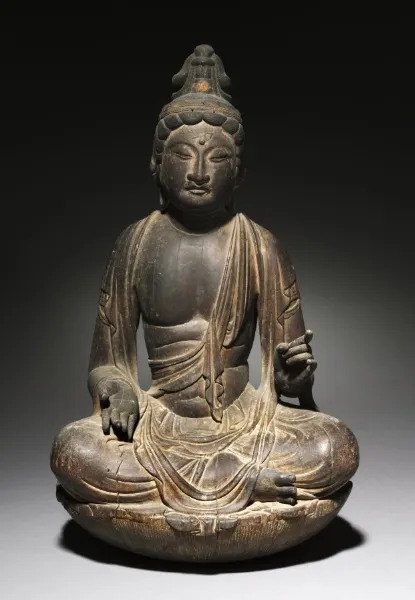
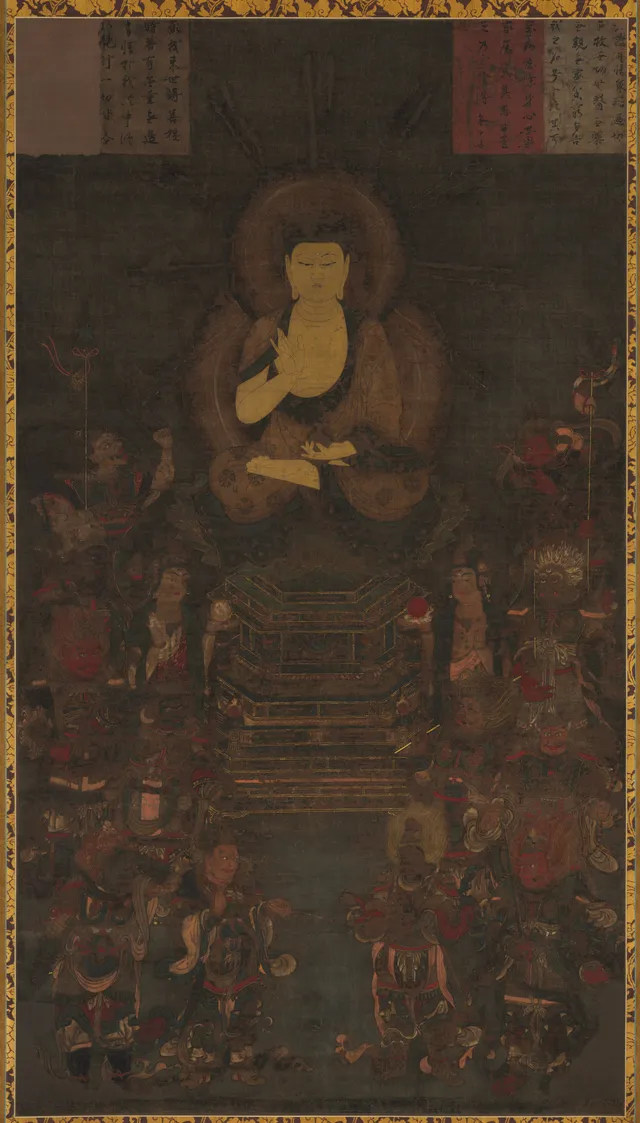
Yakushi (Bhaiṣajyaguru) and his programme. The medicine Buddha Yakushi is not himself a wrathful mikkyō deity — he is a nyorai, a fully awakened Buddha — but his programme in Japanese practice (the Yakushi triad of the central figure flanked by Nikkō and Gakkō; the Twelve Yakushi Generals as protective attendants) is mediated through esoteric ritual. The Yakushi twelve generals reads the twelve-figure protective programme; Nikkō Bosatsu, Yakushi attendant reads the triad’s flanking solar-bodhisattva.
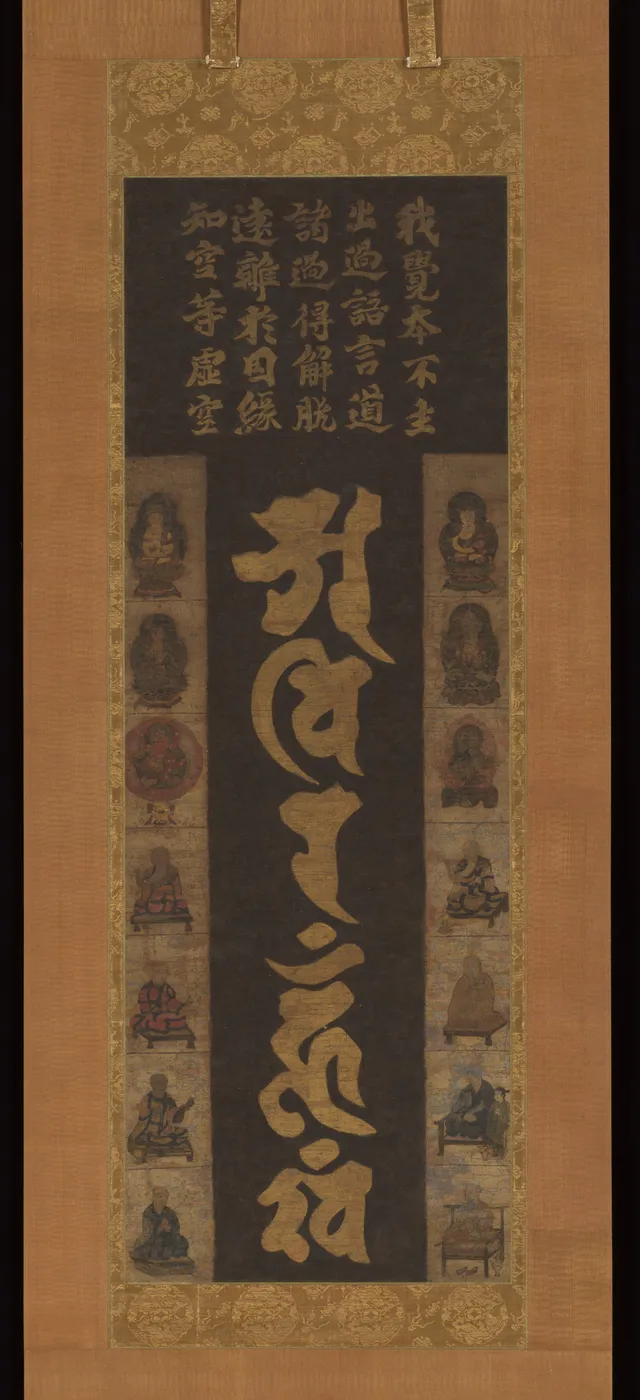
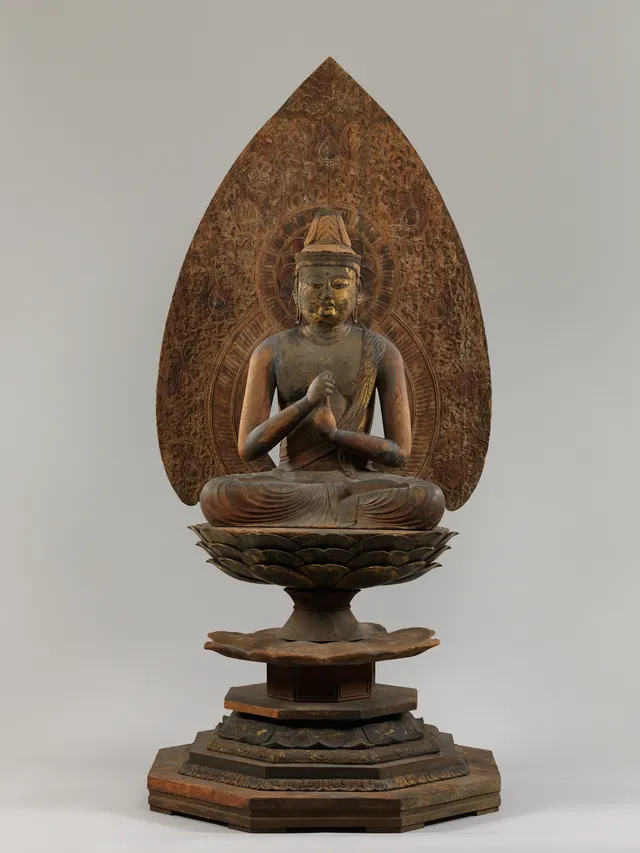
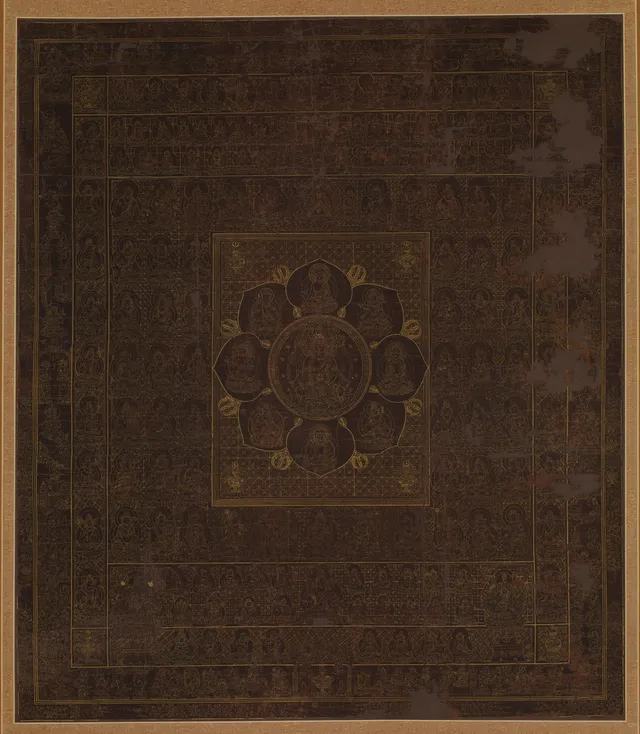
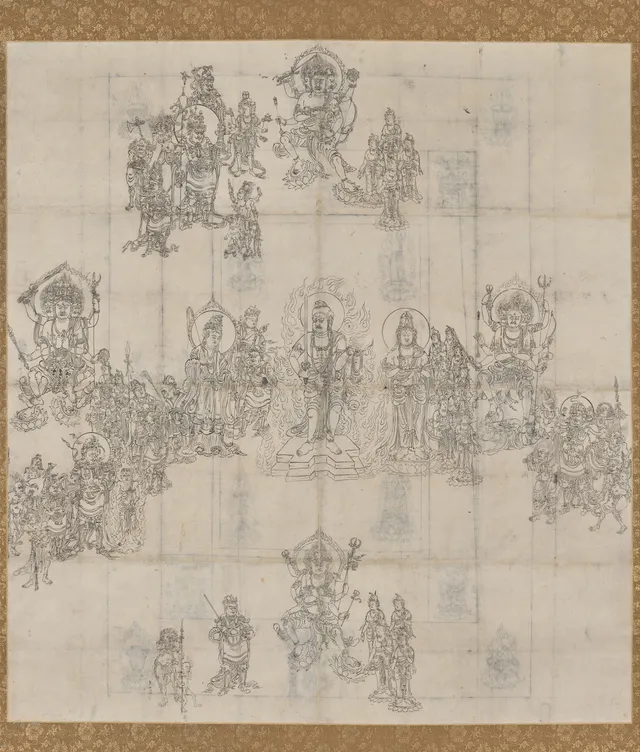
Mandala practice. The Two-Realm Mandalas (Ryōkai Mandara: the Womb-Realm Taizōkai and the Diamond-Realm Kongōkai) are the central organising images of Shingon practice; together they map the entirety of Buddha-nature in two complementary diagrams. The Cleveland 1987.39 Ninnōkyō mandala zuzō of the Heian period is the cluster’s Heian-mandala witness; the Met Kontai Butsugajō by Tameto album fragments reads the iconographic-album tradition that mediates the mandala programme into smaller-scale workshop production.
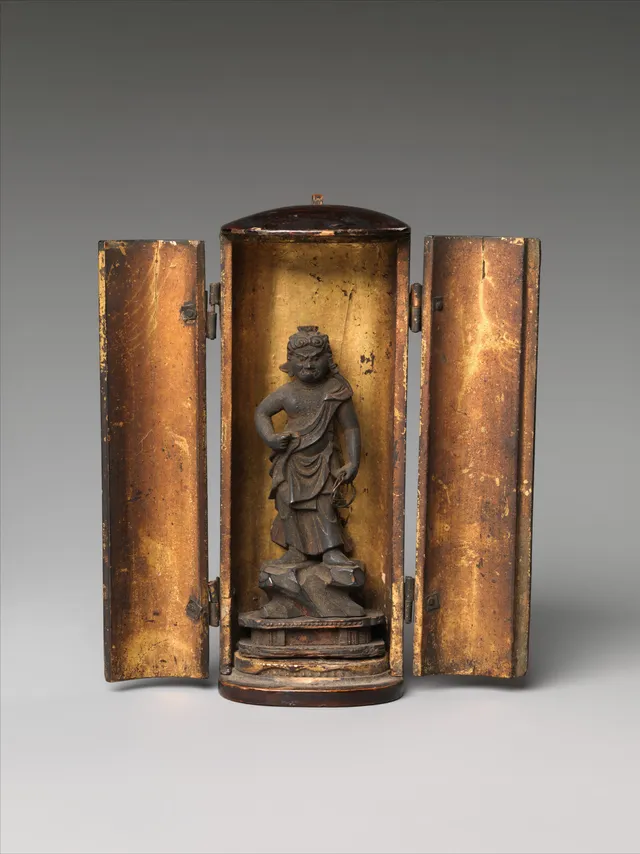
Smaller-scale ritual icons. The Met 2019.418.1 Hachiji Monju (eight-topknot) bronze reads the smaller-scale portable-ritual-icon tradition — the figures sized for individual practitioner use in front of a portable shrine.
What to read first
The reader looking for the canonical wrathful figure should start with the Fudō Myō-ō iconographic markers entry. Fudō is the most-frequently-represented mikkyō deity in the Japanese visual record; the iconographic specification (the kurikara sword, the lasso, the blue-black skin, the snaggle-tooth and the henden hair-knot, the seated-on-rock posture, the flame mandorla) is the load-bearing reading anchor for everything else in the wrathful-deity corpus.
The reader looking for the single-work close reading should start with Met 44842 — the Heian Fudō close reading. It is the cluster’s most-extended single-figure article and demonstrates how the iconographic specification interacts with the surviving Heian painted surface.
The reader looking for the programme structure should start with the disambiguation table below and then read the Met 1975.268.6 Godai Myō-ō handscroll. The handscroll is the most-legible single witness in the cluster to the five-figure programme as a structured group.
The icon-as-specification reading
This is the cluster’s distinctive editorial position. Mikkyō icons are made for use. The Hachiji Monju has eight topknots not for decorative reasons but because the figure corresponds to an eight-character mantra recited in a specific liturgical sequence; the eight topknots on the crown are the visible marker of which ritual programme the figure belongs to. The Five Wisdom Kings sit in a specific configuration in the Two-Realm Mandala programme not for decorative reasons but because their spatial arrangement encodes the cosmological structure of the awakened mind in Shingon doctrine.
This reading shapes how the cluster’s articles describe their objects. Where general art-historical reading might describe an Aizen Myō-ō as “wrathful, six-armed, seated on a lotus, holding a bow and arrow, depicted with intense expression and crown-of-fire,” the cluster’s articles describe the same figure as “the Aizen variant whose six arms carry the bow-and-arrow attribute set prescribed in the Aizen-ō Yuga-ki for the Tantric-Aizen-rite practitioner, with the crown-of-fire signalling the Vajrayāna-tantra version rather than the older Mahāyāna-sutra Aizen variant.” The shift moves from describing-the-image to describing-the-ritual-specification.
The position is defensible because mikkyō iconography is, more than other branches of Japanese Buddhist iconography, prescriptive. The ritual manual literature is voluminous and the iconographic specification is not, in most cases, a matter of artistic choice. A workshop painter producing a Fudō in 1180 was working to a specification documented in the ritual literature; deviation from the specification was uncommon and was itself doctrinally significant. Reading the icon as a specification rather than as a free composition tracks the production economy that actually produced the surviving objects.
What the cluster does not cover
Three things sit at the edge of the mikkyō cluster and are not here:
- Practice / ritual manual exegesis. Articles on specific mikkyō practice (the abhiṣeka initiation rite, the goma fire ceremony, the nyūbu kanjō mountain-ascetic initiation, the textual exegesis of the principal mikkyō sutras) — out of scope. The cluster reads the visual record of mikkyō, not the practice tradition.
- Continental antecedents. Tang-dynasty Chinese esoteric Buddhist transmission (Amoghavajra, Vajrabodhi, the lineage that Kūkai received), Tibetan tantric tradition, the Indian Vajrayāna sources — out of scope.
- Modern Shingon. Post-Meiji Shingon institutional history; modern Shingon practice in Japan and diaspora — out of scope. The cluster’s terminus is roughly the end of the Nanbokuchō period.
What stays open
Two systemic gaps:
The cluster’s coverage of the Two-Realm Mandala as a complete programme is currently anchored by the Cleveland 1987.39 Ninnōkyō zuzō and the Kontai Butsugajō album fragments. Neither is a full Womb-Realm or Diamond-Realm painted mandala. A dedicated article on a canonical Two-Realm Mandala pair — the To-ji set, the Kojima-dera set, or a Met / Cleveland Heian / Kamakura witness — would be a high-leverage addition. The Two-Realm Mandala programme is the central organising image of Shingon, and the cluster covers it currently only at the edges.
The second open question is the Twelve Devas (Jūni-ten) programme. The twelve protective deities are a regular mikkyō programme attested in Heian and Kamakura production; the bodhi corpus has not yet entered this material. A Jūni-ten article would close part of the protective-deity coverage that currently sits across the Yakushi twelve generals and the wrathful-deity articles.
Reading the table
The disambiguation table below carries the Five Wisdom Kings (Godai Myō-ō) grid: principal name, attribute set, mudra register, canonical direction in the Two-Realm Mandala programme, signature visual marker for in-the-room identification. Use it as the variant-level quick-reference for everything in the cluster.
Disambiguation
In this cluster
21 articles


No articles match that filter.